Birth Charts
The Twelve Houses in Astrology: A Deep Guide to Every Life Area
Explore the meaning of all twelve astrological houses, their rulers, empty houses, house cusps, and how to interpret planets in houses.
Why the houses matter
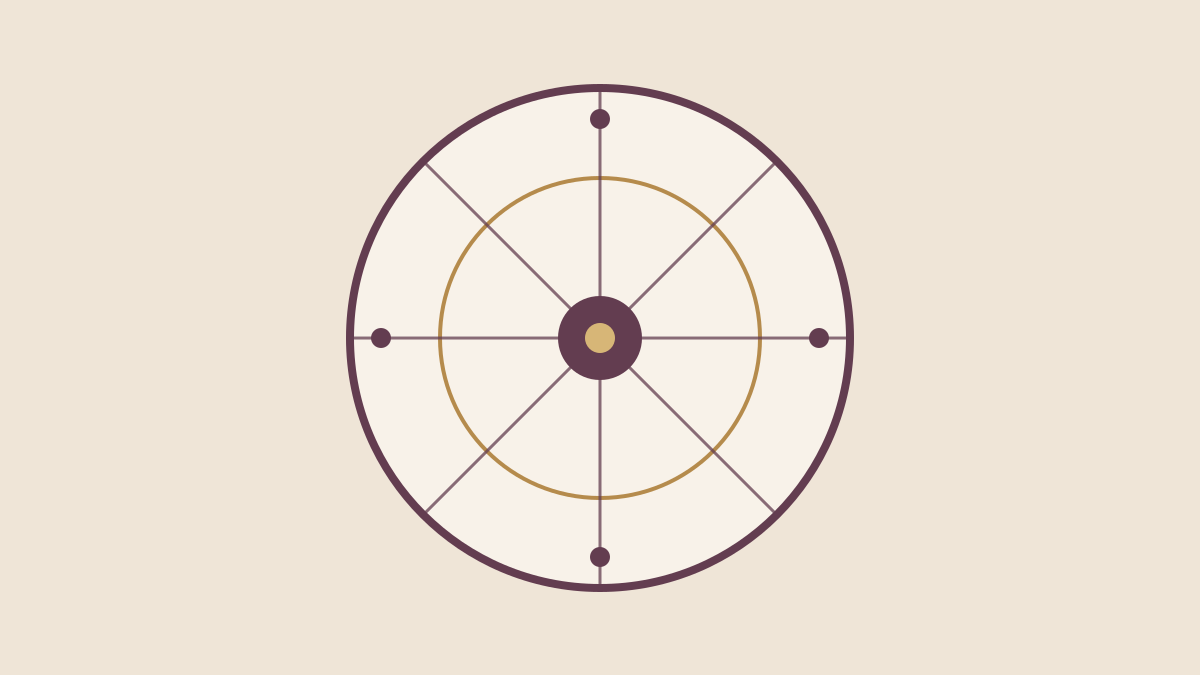
The houses divide a birth chart into twelve areas of lived experience. Signs describe style, planets describe function, and houses show where that function becomes visible. The same planet can operate very differently depending on house placement. Venus in the second house may emphasize beauty, values, and earning, while Venus in the seventh may emphasize partnership and cooperation.
House interpretation begins with the sign on the cusp, the ruling planet of that sign, planets placed inside the house, and aspects those planets receive. An empty house is not an absent life area. It simply means that the house’s story is read primarily through its cusp sign and ruler.
Houses one through three: self and immediate life
The first house describes embodiment, temperament, self-presentation, and how a person enters new situations. Planets here are highly visible. Saturn may make the person measured or self-conscious; Jupiter may make the person expansive or optimistic.
The second house describes personal resources, earning patterns, possessions, values, and self-worth. It asks what creates security and what a person believes they deserve. The third house governs communication, basic learning, siblings, neighbors, transportation, and the everyday exchange of information.
Houses four through six: foundations and daily life
The fourth house describes roots, home, family conditioning, emotional foundations, privacy, and the end of matters. It can reveal the atmosphere a person inherited and the kind of home they need to create.
The fifth house governs creative expression, joy, play, romance, risk, performance, and relationships with children. The sixth house governs daily work, routines, service, craftsmanship, health maintenance, and systems. It often shows how life improves through practical repetition rather than dramatic change.
Houses seven through nine: relationship and meaning
The seventh house describes committed partnerships, contracts, clients, open conflict, and qualities encountered through other people. It can show what someone seeks, admires, resists, or projects.
The eighth house governs shared money, taxes, debt, inheritance, intimacy, trust, crisis, grief, and psychological transformation. The ninth house expands perspective through higher education, travel, philosophy, religion, law, publishing, and encounters with different worldviews.
Houses ten through twelve: public life and the invisible
The tenth house concerns public role, reputation, authority, ambition, vocation, and contribution. The eleventh concerns friendships, communities, professional networks, causes, audiences, and future-oriented goals.
The twelfth house concerns retreat, closure, unconscious material, spiritual life, isolation, institutions, rest, and patterns operating behind the scenes. It is not automatically a negative house. It often describes the need for restoration, compassion, contemplation, and release.
How to read a house ruler
To read a house ruler, identify the sign on the house cusp, then locate that sign’s ruling planet. If Aries is on the second-house cusp, Mars rules the second. Mars’s sign, house, and aspects describe how money, self-worth, and resources are pursued.
The ruler connects two life areas. If the ruler of the second house is in the tenth, earning may be linked to career or reputation. If the ruler of the seventh is in the eleventh, partnership may emerge through friendship, community, or shared goals.
What empty and crowded houses mean
An empty house still becomes active through transits, progressions, and its ruler. A crowded house, or stellium, concentrates attention and development in one life area. Concentration can create talent, urgency, complexity, and imbalance.
Do not assume that more planets mean greater success. A person with many tenth-house planets may feel intense public pressure, while someone with an empty tenth can still have a powerful career through the tenth-house ruler.
Turn insight into personal guidance
Explore Saturn and Spice reports and oracle readings for a more personalized look at your chart, relationships, career, money themes, and upcoming cycles.
Explore readings and reportsContinue exploring
Related articles
For educational and entertainment purposes only. Astrology is not a substitute for medical, legal, financial, or mental-health advice.